1
2
3
4
5
6
7
8
9
10
11
12
13
14
15
16
17
18
19
20
21
22
23
24
25
26
27
28
29
30
31
32
33
34
35
36
37
38
39
40
41
42
43
44
45
46
47
48
49
50
51
52
53
54
55
56
57
58
59
60
61
62
63
64
65
66
67
68
69
70
71
72
73
74
75
76
77
78
79
80
81
82
83
84
85
86
87
88
89
90
91
92
93
94
95
96
97
98
99
100
101
102
103
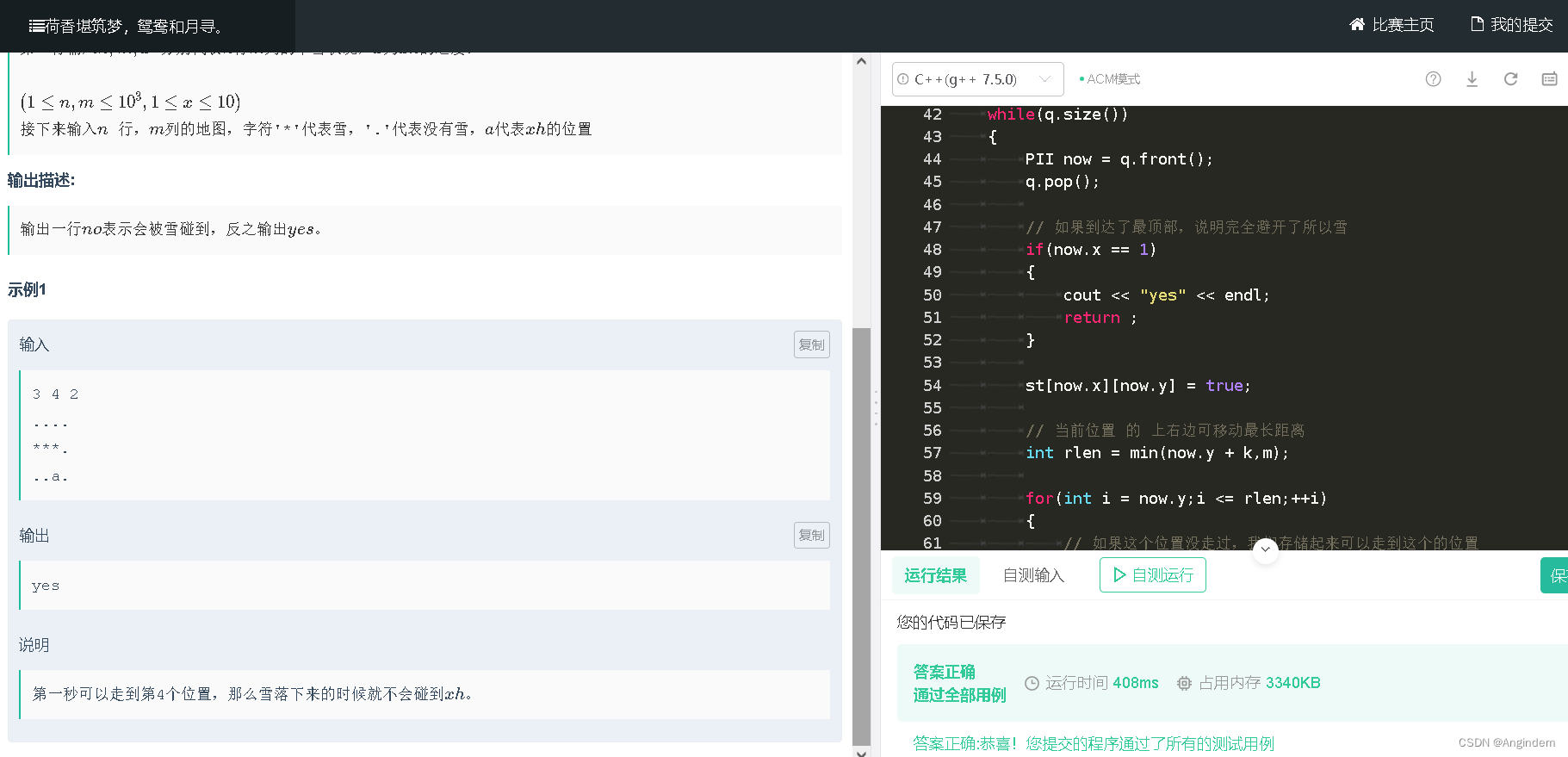
| #include <iostream>
#include <vector>
#include <queue>
#include <cstring>
#include <algorithm>
#include <unordered_map>
#define endl '\n'
#define x first
#define y second
#define int long long
#define YES puts("YES")
#define NO puts("NO")
#define umap unordered_map
#define All(x) x.begin(),x.end()
#pragma GCC optimize(3,"Ofast","inline")
#define IOS std::ios::sync_with_stdio(false),cin.tie(0), cout.tie(0)
using namespace std;
const int N = 2e6 + 10;
inline void solve();
signed main()
{
IOS;
int _t = 1;
while (_t--)
{
solve();
}
return 0;
}
int n,m,k;
char g[1010][1010];
bool st[1010][1010];
using PII = pair<int,int>;
inline void BFS(int x,int y)
{
queue<PII>q;
q.emplace(x,y);
st[x][y] = true;
while(q.size())
{
PII now = q.front();
q.pop();
if(now.x == 1)
{
cout << "yes" << endl;
return ;
}
st[now.x][now.y] = true;
int rlen = min(now.y + k,m);
for(int i = now.y;i <= rlen;++i)
{
if(g[now.x - 1][i] == '.' and !st[now.x - 1][i])
{
st[now.x - 1][i] = true;
q.emplace(PII(now.x - 1,i));
}
}
int llen = min(now.y - k,1LL);
for(int i = now.y - 1;i >= llen;--i)
{
if(g[now.x - 1][i] == '.' and !st[now.x - 1][i])
{
st[now.x - 1][i] = true;
q.emplace(PII(now.x - 1,i));
}
}
}
cout << "no" << endl;
}
inline void solve()
{
int x,y;
cin >> n >> m >> k;
for(int i = 1;i <= n;++i)
{
for(int j = 1;j <= m;++j)
{
cin >> g[i][j];
if(g[i][j] == 'a')
{
x = i;
y = j;
}
}
}
BFS(x,y);
}
|