AcWing 860. 染色法判定二分图
原创 已于 2024-02-27 11:15:42 修改 · 粉丝可见 · 418 阅读 · 5 · 4 · 本内容遵循CC 4.0 BY-SA版权协议 版权声明:本文为博主原创文章,遵循 CC 4.0 BY-SA 版权协议,转载请附上原文出处链接和本声明。 GEO检测 · 编辑
文章链接:https://blog.csdn.net/hacker_51/article/details/136315717
本题链接: 活动 - AcWing
题目:
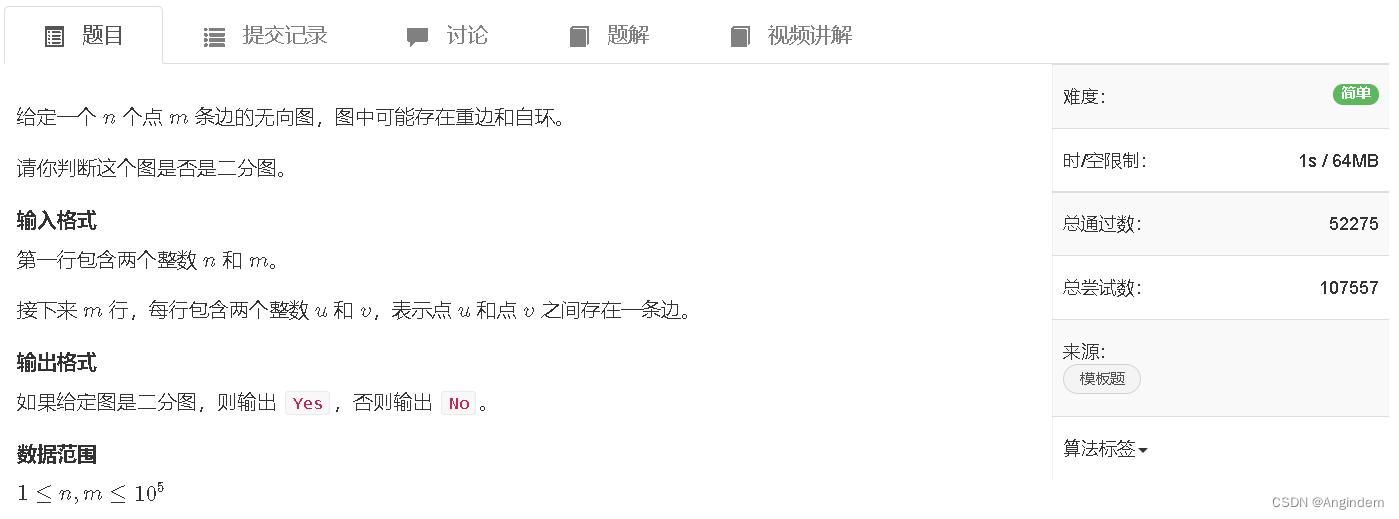
样例:
cobol<br/>4 4<br/>1 3<br/>1 4<br/>2 3<br/>2 4<br/> |
思路:
根据题目意思,我们明确一下二分图的含义。
二分图是图论中的一个重要概念。一个图被称为二分图,当且仅当能够将其所有顶点分割成两个互不相交的子集,使得每条边的两个顶点分别属于不同的子集。
换句话说,对于一个二分图,可以把图中的顶点分成两组,使得同一组内的顶点之间没有边相连,而不同组内的顶点之间有边相连。
通俗的讲,二分图就像是一个人群中的男女混合舞会,所有参与者可以分成两组:男生和女生。在这个舞会上,男生只和女生跳舞,而不和其他男生跳舞;女生也只和男生跳舞,而不和其他女生跳舞。没有两个男生或两个女生会成对跳舞。
如果一个图是二分图,就意味着可以将所有的点分成两组,使得同一组内的点之间没有直接相连的边,而不同组内的点之间有直接相连的边。这种特性在很多实际问题中都有重要的应用。
所以,我们可以用DFS或者BFS暴搜即可枚举出答案。
代码详解如下:
DFS法:
1
2
3
4
5
6
7
8
9
10
11
12
13
14
15
16
17
18
19
20
21
22
23
24
25
26
27
28
29
30
31
32
33
34
35
36
37
38
39
40
41
42
43
44
45
46
47
48
49
50
51
52
53
54
55
56
57
58
59
60
61
62
63
64
65
66
67
68
69
70
71
72
73
74
75
76
77
78
79
80
81
82
83
84
85
86
87
88
89
90
91
92
| #include <iostream>
#include <vector>
#include <queue>
#include <cstring>
#include <algorithm>
#include <unordered_map>
#define endl '\n'
#define int long long
#define Yes puts("Yes")
#define No puts("No")
#define umap unordered_map
#define All(x) x.begin(),x.end()
#pragma GCC optimize(3,"Ofast","inline")
#define IOS std::ios::sync_with_stdio(false),cin.tie(0), cout.tie(0)
using namespace std;
const int N = 2e6 + 10;
int n,m;
vector<int>h(N,-1);
int e[N],ne[N],idx;
inline void Add(int a,int b)
{
e[idx] = b,ne[idx] = h[a],h[a] = idx++;
}
int color[N];
bool DFS(int node,int inColor)
{
color[node] = inColor;
for(int i = h[node];i != -1;i = ne[i])
{
int j = e[i];
if(!color[j])
{
if(!DFS(j,3 - inColor)) return false;
}else if(inColor == color[j]) return false;
}
return true;
}
inline void solve()
{
cin >> n >> m;
while(m--)
{
int a,b;
cin >> a >> b;
Add(a,b),Add(b,a);
}
for(int i = 1;i <= n;++i)
{
if(!color[i])
{
if(!DFS(i,1))
{
No;
return ;
}
}
}
Yes;
}
signed main()
{
IOS;
int _t = 1;
while (_t--)
{
solve();
}
return 0;
}
|
最后提交:

BFS法:
1
2
3
4
5
6
7
8
9
10
11
12
13
14
15
16
17
18
19
20
21
22
23
24
25
26
27
28
29
30
31
32
33
34
35
36
37
38
39
40
41
42
43
44
45
46
47
48
49
50
51
52
53
54
55
56
57
58
59
60
61
62
63
64
65
66
67
68
69
70
71
72
73
74
75
76
77
78
79
80
81
82
83
84
85
86
87
88
89
90
91
92
93
94
95
96
97
| #include <iostream>
#include <vector>
#include <queue>
#include <cstring>
#include <algorithm>
#include <unordered_map>
#define endl '\n'
#define int long long
#define Yes puts("Yes")
#define No puts("No")
#define umap unordered_map
#define All(x) x.begin(),x.end()
#pragma GCC optimize(3,"Ofast","inline")
#define IOS std::ios::sync_with_stdio(false),cin.tie(0), cout.tie(0)
using namespace std;
const int N = 2e6 + 10;
using PII=pair<int,int>;
int n,m;
vector<int>h(N,-1);
int e[N],ne[N],idx;
inline void Add(int a,int b)
{
e[idx] = b,ne[idx] = h[a],h[a] = idx++;
}
int color[N];
inline bool BFS()
{
queue<PII>q;
for(int i = 1;i <= n;++i)
{
if(!color[i])
{
q.emplace(PII(i,1));
while(q.size())
{
PII now = q.front();
q.pop();
int node = now.first;
int inColor = now.second;
color[node] = inColor;
for(int i = h[node];i != -1;i = ne[i])
{
int j = e[i];
if(!color[j])
{
q.emplace(PII(j,3 - inColor));
}else if(color[j] == inColor) return false;
}
}
}
}
return true;
}
inline void solve()
{
cin >> n >> m;
while(m--)
{
int a,b;
cin >> a >> b;
Add(a,b),Add(b,a);
}
if(BFS()) Yes;
else No;
}
signed main()
{
IOS;
int _t = 1;
while (_t--)
{
solve();
}
return 0;
}
|
最后提交: